

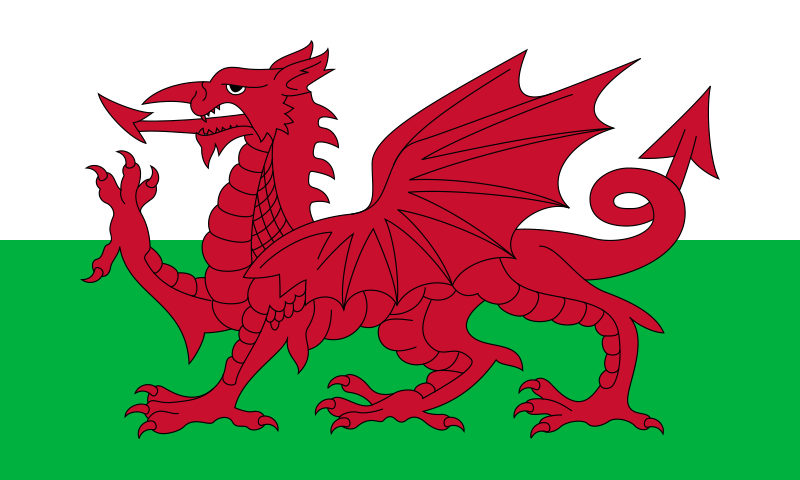
Entradas para ver a Gales en el Mundial de Rugby 2027
Mundial de Rugby 2027 en Australia
Entradas disponibles


Recibe avisos de entradas del Mundial de Rugby 2027
Entérate antes que nadie cuando salgan nuevas entradas y paquetes VIP.
Entradas de Gales para el Mundial de Rugby 2027
Puesto número 11 del mundo
Banda 2 - Guerreros orgullosos
La selección nacional de rugby de Gales , undécima del mundo, llega a la Copa Mundial de Rugby 2027 en Australia como cabeza de serie de Banda 2, con una orgullosa historia y un historial de campeonato que la hacen eternamente peligrosa. A pesar de sus fluctuaciones en la clasificación, Gales sigue siendo una nación con experiencia en semifinales de la Copa Mundial, credenciales de Grand Slam y la mentalidad guerrera que da la sorpresa en los torneos. El Ejército Rojo viaja a Australia decidido a demostrar el resurgimiento del rugby galés.
Observa la apasionante combinación de físico y habilidad de Gales en Sídney , Brisbane , Melbourne y más allá. Desde duelos en la fase de grupos contra potencias de la Banda 1 como Sudáfrica , Australia o Francia hasta posibles sorpresas en las eliminatorias, Gales lleva el orgullo celta y su experiencia en el campeonato a cada partido.
¿Por qué ver a Gales en la RWC 2027?
- Pedigrí de la Copa del Mundo: Tres veces semifinalistas con mentalidad de campeón
- Historial de matanza de gigantes: famoso por sus sorpresas en torneos contra naciones de mayor clasificación.
- Apoyo apasionado: el Ejército Rojo crea atmósferas intimidantes en todo el mundo
- Intensidad física: potencia ofensiva y resiliencia defensiva en el ADN galés
- Patrimonio de las Seis Naciones: Probado anualmente contra la élite europea
- Especialistas en regresos: Actitud de nunca darse por vencido que produce finales dramáticos
Calendario de partidos de Gales 2027
La asignación de grupos se determinará después del sorteo del torneo.
Fase de grupos
Como cabeza de serie de Banda 2 (11º en el ranking mundial), Gales será sorteado en un grupo con un equipo de Banda 1, uno de Banda 3 y uno de Banda 4. El formato ampliado de 24 equipos significa que los dos mejores equipos de cada grupo, más los cuatro mejores terceros clasificados, avanzan a los octavos de final. La experiencia de Gales en el campeonato y su capacidad para mejorar su juego en las grandes ocasiones los convierten en fuertes candidatos para progresar.
Posibles rivales de grupo:
- Banda 1: Sudáfrica , Nueva Zelanda , Irlanda , Francia , Inglaterra , Argentina , Australia o Fiji
- Banda 3: Georgia, Uruguay, España o EE. UU.
- Banda 4: Chile, Tonga, Samoa, Portugal, Rumania, Hong Kong, Zimbabue o Canadá
Ruta de la fase eliminatoria
Gales aspira a avanzar a octavos de final y más allá, aprovechando su amplia experiencia en eliminatorias de rugby. Llegar a cuartos de final representaría una campaña exitosa, aunque su historial indica que son capaces de avanzar más cuando el ritmo aumenta. Sus tres semifinales previas (1987, 2011, 2019) demuestran la pericia de Gales en los torneos.
Estructura del torneo:
- Octavos de final: 16 equipos compitiendo por 8 puestos en cuartos de final
- Cuartos de final: 8 equipos luchan por 4 plazas en semifinales
- Semifinales: Ambos partidos en el Estadio Accor, Sídney
- Final: Partido decisivo del campeonato en el Estadio Accor
Contexto histórico: Gales alcanzó las semifinales tanto en 2011 (perdiendo ante Francia) como en 2019 (perdiendo ante Sudáfrica), demostrando su capacidad para alcanzar su máximo potencial durante los torneos de la Copa Mundial. Su campaña de 2011 causó especial sensación, con derrotas por la mínima ante Sudáfrica (fase de grupos) y Francia (semifinal), lo que demostró que Gales pertenecía a la élite.
Ciudades anfitrionas: Los partidos de Gales se jugarán en sedes australianas, incluido el Estadio Accor de Sídney , el Estadio Suncorp de Brisbane , el Parque AAMI de Melbourne y estadios regionales donde el Ejército Rojo creará atmósferas inolvidables con apasionados cantos y apoyo galeses.
Información sobre entradas para la RWC 2027 de Gales
Categorías de entradas
- Categoría A: Asientos premium con las mejores vistas, posiciones en el medio del campo
- Categoría B: Excelentes vistas desde detrás de las áreas de portería y líneas laterales
- Categoría C: Asientos de gran valor en los niveles superiores y secciones de esquina
- Hospitalidad: Paquetes VIP que incluyen comida premium, bebidas y asientos privilegiados.
Los mejores asientos para los partidos de Gales
Para disfrutar al máximo del rugby galés, los asientos de categoría A y B en la tribuna inferior ofrecen las mejores vistas del juego físico de ataque y los movimientos de la zaga de Gales. El Ejército Rojo suele crear secciones de canto que resuenan en los estadios, con himnos tradicionales galeses que crean una atmósfera erizada que intimida a los rivales.
Guía de precios
Los precios de las entradas varían según la importancia del partido y el lugar:
- Fase de grupos: $120 - $380 AUD por entrada
- Octavos de final: 200 $ - 550 $ AUD por entrada
- Cuartos de final: $300 - $750 AUD por entrada
- Semifinales: $500 - $1,200 AUD por entrada (si Gales avanza)
- Final: $800 - $2,500 AUD por boleto (si Gales avanza)
Los partidos de grupo de Gales ofrecen un valor excelente y ofrecen un rugby de primer nivel acompañado del famoso canto galés y un apoyo apasionado.
Historia y estadísticas de la Copa Mundial de Gales
Lo mejor de la Copa del Mundo
3er lugar (1987)
Tres apariciones en semifinales
Récord del torneo
35 victorias - 25 derrotas
58,3% de tasa de victorias en Copas del Mundo
Máximo anotador de tries de todos los tiempos
Shane Williams
6 tries en la Copa del Mundo
Forma actual
Número 11 del mundo
Cabeza de serie de la Banda 2
Momentos famosos de la Copa Mundial
Tercer puesto en 1987: En su primera participación en la Copa Mundial, Gales alcanzó las semifinales antes de perder contra el eventual campeón, Nueva Zelanda. Derrotaron a Australia en el partido por el tercer puesto, consolidando a Gales como una potencia del torneo. La campaña contó con actuaciones memorables de leyendas como Ieuan Evans y Jonathan Davies.
Campaña de Casi Final 2011: La Copa Mundial más desgarradora de Gales los vio perder 9-8 contra Francia en la semifinal tras la controvertida tarjeta roja de Sam Warburton. Antes, Gales había superado a Sudáfrica, eventual finalista, con un marcador de 17-16 en un emocionante partido de la fase de grupos. El torneo mostró a Gales en su mejor momento competitivo, quedándose a las puertas de la final.
Semifinales de 2019: Gales alcanzó su tercera semifinal del Mundial, derrotando a Francia en un emocionante partido de cuartos de final antes de perder contra el eventual campeón, Sudáfrica. Esta campaña demostró la capacidad de Warren Gatland para alcanzar el máximo rendimiento de Gales durante los torneos a pesar de su modesta preparación.
Victoria de Inglaterra en 2015: La victoria de Gales por 28-25 sobre Inglaterra en Twickenham se encuentra entre los mejores partidos de la fase de grupos de la Copa Mundial. El triunfo eliminó a la anfitriona, Inglaterra, de su propio torneo, demostrando la capacidad de Gales para destacar en grandes ocasiones.
Principales rivalidades en las Copas del Mundo
vs. Inglaterra: La rivalidad histórica se intensifica en los Mundiales, con encuentros memorables como el famoso triunfo de Gales en Twickenham 2015 y la victoria de Inglaterra en cuartos de final en 2003. Estos partidos se caracterizan por su intensidad física, su ambiente apasionado y la gran apuesta por el campeonato, lo que los convierte en encuentros imprescindibles.
vs Australia: Gales se ha enfrentado a Australia seis veces en Mundiales, con una ventaja de 5-1 para los Wallabies. Sin embargo, los partidos suelen ser reñidos y muy físicos. La única victoria de Gales fue en el partido por el tercer puesto de 1987, aunque han mantenido una estrecha relación con Australia en enfrentamientos posteriores.
vs. Francia: Esta rivalidad ha producido algunos de los momentos más dramáticos de la Copa Mundial de rugby. Las victorias de Francia en semifinales en 2011 (tras la expulsión de Warburton) y 1987 marcan la historia del rugby galés, mientras que el triunfo de Gales en cuartos de final en 2019 supuso la redención. Estos encuentros siempre ofrecen intensidad y dramatismo.
vs Sudáfrica: Gales y Sudáfrica han protagonizado clásicos de la Copa Mundial, incluyendo derrotas por la mínima para Gales en 2011 (17-16) y 2015 (23-19). Los Springboks ganaron la semifinal de 2019 con comodidad, pero Gales siempre compite con fiereza contra los vigentes campeones.
El estilo de juego de Gales
Fundación Physical Forward
El rugby galés se basa en el dominio delantero, especialmente en el scrum y el breakdown. El pack galés se caracteriza tradicionalmente por potentes portadores de balón que abren brechas en las líneas defensivas y agotan a los rivales con un juego físico implacable. El scrum galés busca presionar a los rivales, mientras que el lineout proporciona plataformas de ataque. Esta base delantera refleja la herencia del rugby de clase trabajadora de Gales y sigue siendo fundamental para su identidad.
Gestión territorial de los juegos
Gales emplea un enfoque pragmático que prioriza el territorio y la presión. Sus aperturas utilizan el golpeo táctico para acorralar a los rivales en profundidad, forzando errores y creando oportunidades de ataque. Gales destaca por generar una presión sostenida en múltiples fases, esperando pacientemente las oportunidades defensivas para explotarlas. Esta estrategia territorial se adapta a la fortaleza ofensiva y la resiliencia defensiva de Gales.
Orgullo defensivo
Los sistemas defensivos galeses se caracterizan por una velocidad agresiva en la línea, una estructura organizada y orgullo en cada placaje. Los defensores galeses placan con ferocidad y compromiso, reflejo de su cultura rugby. Su defensa busca dominar físicamente a los rivales, forzando pérdidas de balón y errores. Esta mentalidad defensiva ha mantenido históricamente a Gales competitivo contra naciones de mayor rango, especialmente durante los Mundiales, cuando la solidez defensiva es fundamental.
Ataque oportunista
Si bien Gales prioriza el territorio y la defensa, posee peligrosas armas de ataque. Cuando se presenta la oportunidad, la zaga galesa se caracteriza por su velocidad y habilidad para aprovechar el espacio. Su capacidad de contraataque a partir de pérdidas de balón crea ocasiones de try, mientras que su juego de fases estructurado descompone metódicamente las defensas cansadas. Gales anota gracias a la potencia ofensiva y la definición de la zaga.
Jugadores clave de Gales para la RWC 2027
Lago Dewi (Hooker)
El joven capitán galés lidera desde la primera línea, aportando potencia en el scrum, precisión en el line-out e impacto en la conducción del balón. Las cualidades de liderazgo y el esfuerzo de Lake ejemplifican los valores del delantero galés. Su capacidad para rendir en momentos de presión lo convierte en un jugador crucial para las ambiciones de Gales en el torneo. Lake representa la próxima generación de líderes de Gales.
Taulupe Faletau (Número 8)
El experimentado número ocho aporta potencia en la conducción del balón, fortaleza defensiva e inteligencia para el rugby. La capacidad de Faletau para doblar las líneas defensivas y descargar en contacto crea oportunidades de ataque. Su experiencia en la Copa Mundial de 2011, 2015 y 2019 le aporta un conocimiento invaluable de los torneos. Faletau sigue siendo el delantero más influyente de Gales.
Dan Biggar (apertura)
El experimentado apertura galés orquesta su plan de juego territorial con patadas tácticas y gestión del juego. La competitividad y la fiabilidad de Biggar al patear lo hacen indispensable. Su experiencia en la Copa Mundial y su capacidad para rendir bajo presión le brindan a Gales una dirección táctica. El liderazgo y la comunicación de Biggar organizan la estructura ofensiva galesa.
Josh Adams (ala)
El máximo anotador de tries de Gales combina velocidad, potencia e instinto rematador. Adams destaca por su capacidad para leer el juego y apoyar los quiebres, mientras que su posicionamiento crea oportunidades de try. Su actuación en la Copa Mundial de 2019, donde encabezó la tabla de tries del torneo, demostró su precisión en la definición. Adams sigue siendo el arma de ataque más peligrosa de Gales.
Jac Morgan (Flanker)
El dinámico flanker aporta experiencia en el quiebre, impacto en la conducción del balón e intensidad defensiva. Las habilidades de Morgan rompen la posesión del rival, mientras que su intensidad cubre terreno tanto en defensa como en ataque. Su surgimiento aporta energía juvenil al experimentado grupo galés, proporcionando el equilibrio que Gales necesita para triunfar en el torneo.
Preguntas frecuentes - Gales RWC 2027
¿Cuándo juega Gales en la Copa Mundial de Rugby 2027?
El calendario exacto de partidos de Gales se confirmará tras el sorteo del torneo. Como cabeza de serie de Banda 2, Gales jugará tres partidos de grupo repartidos en aproximadamente cuatro semanas entre septiembre y octubre de 2027. Los partidos de grupo suelen disputarse durante los fines de semana, con periodos de recuperación entre encuentros. Si Gales avanza en su grupo como se espera, competirá en las fases eliminatorias (octavos de final, posibles cuartos de final y posteriores) durante octubre y noviembre. El torneo se celebra desde principios de septiembre hasta mediados de noviembre, y la final se disputará en el Estadio Accor de Sídney. Gales tradicionalmente juega los partidos de fin de semana para dar cabida a su apasionada afición viajera.
¿Podrá Gales alcanzar otra semifinal del Mundial?
Sí, Gales posee la experiencia y el prestigio en torneos necesarios para alcanzar su cuarta semifinal de la Copa Mundial. Lo lograron en 1987, 2011 y 2019, demostrando su capacidad para alcanzar su máximo potencial durante los torneos. Como cabeza de serie de Banda 2, Gales se enfrenta a rivales de grupo exigentes, pero históricamente ha estado a la altura de las grandes ocasiones. La mentalidad de campeón de Gales, desarrollada a través de campañas del Seis Naciones y participaciones previas en la Copa Mundial, los convierte en rivales peligrosos en las eliminatorias. El éxito depende de evitar lesiones a jugadores clave, sorteos favorables y el impulso que Gales genera cuando rinde al máximo. Su historial en semifinales demuestra que Gales se encuentra entre los equipos capaces de llegar lejos en los torneos.
¿Quién es el jugador más importante de Gales en la RWC 2027?
Varios jugadores serán cruciales, pero el octavo, Taulupe Faletau, destaca como el jugador más influyente de Gales. Su potencia al portar el balón, su fortaleza defensiva y su inteligencia en el rugby le dan a Gales impulso y organización defensiva. El liderazgo del capitán Dewi Lake y su habilidad como hooker anclan las jugadas a balón parado, mientras que el pateo táctico y la gestión del juego del apertura Dan Biggar dirigen el enfoque territorial de Gales. El alero Josh Adams proporciona una definición que anota tries, como lo demuestra su liderazgo en la Copa Mundial de 2019. El éxito de Gales depende de la constancia de su experimentado núcleo central durante todo el torneo.
¿Qué hace que Gales sea peligroso a pesar de estar clasificado en la Banda 2?
El pedigrí mundialista y la experiencia en campeonatos de Gales los convierten en un equipo siempre peligroso, independientemente de su clasificación. Han llegado a tres semifinales y compiten constantemente con selecciones de mayor rango durante los torneos. Gales posee la mentalidad y la disciplina táctica necesarias para ejecutar estrategias de presión que ponen en aprietos a los favoritos. Su potente grupo de delanteros puede dominar las jugadas a balón parado contra cualquiera, mientras que su organización defensiva los mantiene competitivos. Gales destaca en el rugby de torneo, con un marcado carácter de desgaste, mejorando su rendimiento a medida que avanzan las campañas. La afición visitante del Ejército Rojo crea un ambiente familiar, lo que eleva el rendimiento galés. La historia de Gales demuestra que las clasificaciones no determinan su potencial en torneos.
¿Dónde se reunirá el Ejército Rojo en Australia?
El legendario Ejército Rojo seguirá a Gales por las ciudades anfitrionas de Australia, y se esperan grandes concentraciones dondequiera que juegue Gales. Las ciudades australianas suelen organizar zonas para aficionados y áreas de apoyo para los aficionados internacionales del rugby. Sídney, Melbourne y Brisbane ofrecen una amplia infraestructura de pubs y hostelería para acoger a los aficionados galeses. El Ejército Rojo tradicionalmente crea secciones de canto en los estadios, con himnos galeses como "Pan del Cielo" y "Calon Lan" que crean un ambiente emotivo. La asociación de aficionados de Gales coordina las actividades, los viajes y las reuniones de los aficionados. Se espera que las banderas, las camisetas y el apasionado apoyo galés creen mares rojos en las sedes australianas y sus alrededores.
¿Cuánto cuestan las entradas para la Copa Mundial de Rugby de Gales?
Las entradas para la fase de grupos de Gales parten desde $120 AUD para asientos de Categoría C, lo que ofrece una excelente relación calidad-precio para disfrutar de un rugby de primera clase con la apasionada afición galesa. Las entradas premium de Categoría A para los partidos de la fase de grupos oscilan entre $280 y $380 AUD. Si Gales avanza a la fase eliminatoria, como se espera, los precios de las entradas aumentan: octavos de final ($200-$550), cuartos de final ($300-$750), semifinales ($500-$1200) y final ($800-$2500). Los precios varían según la sede, el rival y la ubicación del asiento. Los partidos de Gales ofrecen una excelente relación calidad-precio para los aficionados neutrales que desean vivir el ambiente del rugby de la Copa Mundial, especialmente con el famoso canto del Ejército Rojo, que crea experiencias únicas el día del partido a precios accesibles.
¿Cuál es el rival potencial más duro de Gales en el grupo?
Como cabeza de serie de Banda 2, Gales se enfrentará a un peso pesado de Banda 1 en su grupo. Los rivales potenciales más duros serían Sudáfrica, vigente campeona del mundo y número uno del mundo, o Nueva Zelanda (una potencia tradicional). Jugar contra Irlanda renovaría su rivalidad en el Seis Naciones en el Mundial con mayor intensidad. Enfrentarse a Australia, la anfitriona, en Australia, con la ventaja de su público local, crearía condiciones extremadamente difíciles. Sin embargo, el historial de Gales en el Mundial demuestra que compite con fuerza contra todas estas naciones. Gales se acercó a Sudáfrica en 2011 y 2015, demostrando que puede desafiar incluso a los mejores del mundo cuando ejecuta su estrategia con eficacia.
Entradas relacionadas con la Copa Mundial de Rugby 2027
Posibles rivales de grupo
- Entradas para los South Africa Springboks : un posible rival de la Banda 1
- Entradas para los All Blacks de Nueva Zelanda : un rival histórico
- Entradas para los Australia Wallabies : el desafío del país anfitrión
- Entradas de rugby de Irlanda : rival de las Seis Naciones
Rivalidades históricas
- Entradas para el rugby inglés : El rival más antiguo, posible revancha en 2015
- Entradas para la revancha de la semifinal de Francia 2011
- Entradas para el Ejército de Tartán de Escocia - Rival del Celtic
- Entradas para Fiji Rugby - Batallas de la fase de grupos
Competidores de la Banda 2
- Entradas para el Scotland Tartan Army : rival de las Seis Naciones
- Entradas para la Azzurri de Italia : rival de las Seis Naciones
- Entradas para Japan Brave Blossoms - Oponente del grupo 2019
Ciudades anfitrionas
- Entradas para la RWC 2027 de Sídney : Sede de la final y semifinales
- Entradas para la RWC 2027 de Brisbane - Sede de los cuartos de final
- Entradas para la RWC 2027 de Melbourne : sede de los principales partidos
- Entradas para la RWC 2027 de Perth - Sede de los partidos inaugurales
Guías de la Copa Mundial de Rugby 2027
Entradas auténticas 100% garantizadas | Entrega de entradas móvil | Pago seguro | Confianza desde 2011